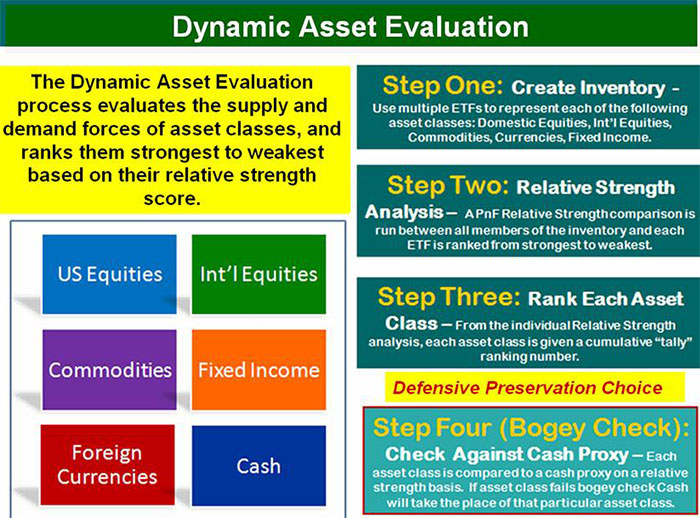
Investment ProcessWe Use a Four-Step Investment Process For Investing2000 was the end of a multi-decade Bull Market. Some say the end was the fall of 2007. Either way we have begun a long-term secular bear maket where investment success MUST acknowledge that not all companies will necessarily survive in their prior glory, or at all. Monitoring and reacting in a disciplined manner is essential for protecting capital and advancing portfolio values. This chart illustrates the basic steps to make informed adjustments. Rebalancing winners into laggards is only rationale for those who have no clue what to do. Relative strength and Point and Figure charts provide a current conditions report allowing an investor confidence in rebalancing from laggards to leaders: a more robust process increasingly recognized by academics.
Domestic Versus Global
Strategic versus Tactical Tactical strategies are commonly used by investors looking to take advantage of areas of the market they think offer better opportunities at a particular moment. For example, if they see exceptional growth potential in US stocks relative to the other assets classes (such as overseas equities or bonds), they might increase their portfolio exposure to domestic stocks while reducing their stake in bonds and foreign markets. Not al tactical strategies include cash as a defensive position to protect capital. A 100% relative strength strategy does not necessarily include large cash positions. As illustrated in our chart, Investor Resouces use of relative strength can include significant cash balances when general market conditions are deteriorating. We consider cash a separate asset class to be used for defensive purposes. Relative strength is a tactical investment process to identify strength and weakness in global markets and the underlying components. If you want to consider implementing this process in your accounts, Investor Resoruces can help. IRI has several strategies available to accomodate portfolios of various sizes. Asset Class Rotation: Markets shift with adjustments in global economies and demographic demand for products and services. Investors adapt by changing what they are willing to buy or sell in the capital markets. Price trends are an indicator of investors' optimism or pessimism on any specific issue or asset class. You can see our recent changes here. Ask us for a free evaluation of your present portfolio. We look forward to talking with you soon.
|